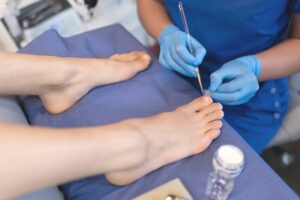
To meet the needs of patients, podiatrists educate and specialize in foot care for at-risk patients. A patient with diabetes requires a special approach and podiatric care. An informed podiatrist works with the interdisciplinary team to be able to provide comprehensive assistance to the patient at every stage of treatment
Today, in an effort to show support for people with diabetes, here is some advice, taken from Sara Nowicka, MA. She is a specialist focused on ZSC - diabetic foot syndrome. She gained her experience at the Department of Diabetology and Internal Medicine in Poznan. She is a lecturer at the College of Education and Therapy and editor-in-chief of the Podiatry Quarterly for Specialists. She has been running podiatry offices in medical clinics for more than a dozen years.
We invite you to join the conversation.
AARKADA: Ms. Sara we know that diabetes is a metabolic disease characterized by elevated sugar levels, how does it affect the condition of the feet?
Sara Nowicka: High sugar levels mean a high risk of developing diabetes complications. Diabetic foot syndrome is one of the more serious chronic consequences of poor metabolic control of this disease.
Hyperglycemia leads to pathological changes in the nervous system, such as atrophy of nerve sheaths (demyelination) or changes in the nerve fibers themselves. Atrophy and weakening of sensation in the feet (that is, a consequence of diabetic neuropathy), often leads to skin damage and consequent ulceration. In addition, neuropathy causes significant dryness of the skin, a greater tendency to develop calluses and cracked heels.
Diabetes also causes vascular damage and promotes atherosclerosis.
The characteristic symptom of arterial insufficiency of the lower extremities is stopping chrome, which is pain in any of the floors of the lower limb that appears during walking and subsides at rest, and rest pain located in the leg that subsides when the limb is placed in a relieving position.
Some patients have symptoms caused by both neuropathy and ischemia. This is because the formation of vascular lesions and the development of neuropathy are influenced by similar factors: long-term hyperglycemia and genetic background.
AARKADA: Should a diabetic watch his feet regularly and what should he pay special attention to?
Sara Nowicka: Self-monitoring and observation of the feet is a very important part of diabetic foot syndrome prevention. An educated and aware patient is half the battle. A diabetic should check the condition of his feet every day - check for damage to the skin and nails, make sure that there is no element in the shoes that can cause a wound. Very often ulcers in the course of diabetic foot syndrome, have their origin in a minor skin injury, so any injury to the feet should be disinfected, protected with a dressing and consulted with a specialist.
In addition to self-examination, periodic podiatric check-ups are also recommended, combined with specialized foot care.
AARKADA: Diabetic foot syndrome is a serious complication, what is the level of the problem?
Sara Nowicka: It can be said that diabetes is the first non-communicable epidemic of the 21st century. More than half a billion patients worldwide, 6 million deaths from the disease or its complications in 2021. It is estimated that 783million people will already be ill in 2045.
In Poland, we have 3million adult diabetics, or one in eleven of us. We are talking here about diagnosed people. Meanwhile, some people have a pre-diabetic state or do not know they have diabetes, which is especially dangerous. An undiagnosed person is an untreated person and this, in turn, increases the risk of complications. ZSC affects 6-10% of diabetics.
The most tragic moment for a patient with diabetic foot syndrome is the need to amputate a lower limb. It is estimated that an amputation of part of the foot or lower limb is performed every 30 seconds worldwide due to ZSC. The mortality rate is higher than for most malignancies: 39-80% of patients die within five years of amputation. Only 19% of patients who have had one lower limb amputated are able to walk a kilometer, and 49% of patients require a second amputation over time.
The numbers speak for themselves.
AARKADA: On a daily basis you meet people with ZSC, what do you pay attention to in your daily care?
Sara Nowicka: Diabetics should use skin care products recommended by a specialist. Choosing the optimal ingredients is extremely important. There is no one universal preparation for every diabetic. What is universal, however, is the principle: take care of your feet every day: hygiene + self-control + care
Diabetics often struggle with excessive keratosis, including as a result of foot deformities. In such situations, in addition to proper care, it is advisable to assess their alignment and relieve pressure on problem areas, so that ulceration does not develop in these areas. Particularly dangerous and absolutely forbidden is the use of preparations dedicated "for corns", which contain strong acids.
AARKADA: What else negatively affects foot health with diabetes
Sara Nowicka: The most common mistake is the incorrect choice of footwear. Both too small and too large shoes can cause injuries. Additionally, shoes that are comfortable are not always appropriate. Diabetics often have abnormal sensation in their feet so they cannot rely on their own feelings alone. In addition, any new items (e.g. insoles, orthoses, shoes) are incorporated gradually - getting used to and observing the reaction of the feet.
AARKADA: Thank you very much for sharing your knowledge and practical advice.