Every day they walk with us hundreds of steps, carry the weight of our entire body and are often exposed to intense exertion - and yet it is the feet that are sometimes the most overlooked part of the body in daily care. The result? Dry, calloused skin, cracked heels or corns, which can lower not only the aesthetics of the feet, but also the comfort of walking. However, proper foot care is more than just a matter of appearance - it is also prevention and health care. Fortunately, there are effective solutions - from professional care at a podiatrist's office to daily habits and specialized cosmetics that can be used at home.
Cracked heels, corns, calluses - how to prevent and effectively deal with them?
Problems such as calloused skin, cracked heels and calluses are among the most common ailments with which patients come to the podiatrist's office. Their causes range from overloading the feet, to wearing the wrong footwear, to lack of regular care.
Where do these problems come from?
The skin of the feet is naturally thicker than in other parts of the body, as it needs to protect against pressure and abrasion. However, if the skin barrier is disrupted, excessive keratinization and dryness occur. This results in corns, calluses and, in more severe cases, cracked heels, which can cause pain and discomfort.
What symptoms should worry you and when to go to a specialist?
Particularly noteworthy is when the skin becomes hard, rough and begins to crack. Deep clefts on the heels can be very painful. If the problem grows despite the use of drugstore cosmetics, this is a clear signal that it's time to go to a podiatrist, who will assess the condition of the feet and choose the appropriate therapy.
Professional foot care in the podiatrist's office - step by step
Regular visits to a podiatrist are an effective way to maintain healthy and smooth feet. With specialized tools and experience, the expert can minimize discomfort, improve the appearance of the skin and restore walking comfort.
Cleansing, milling, preparation of heels and nails - the course of treatment
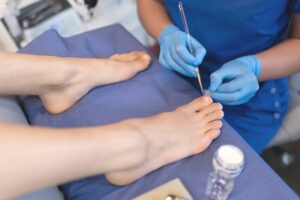
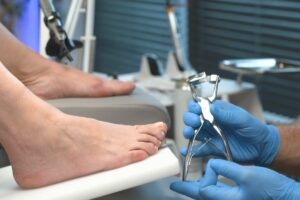
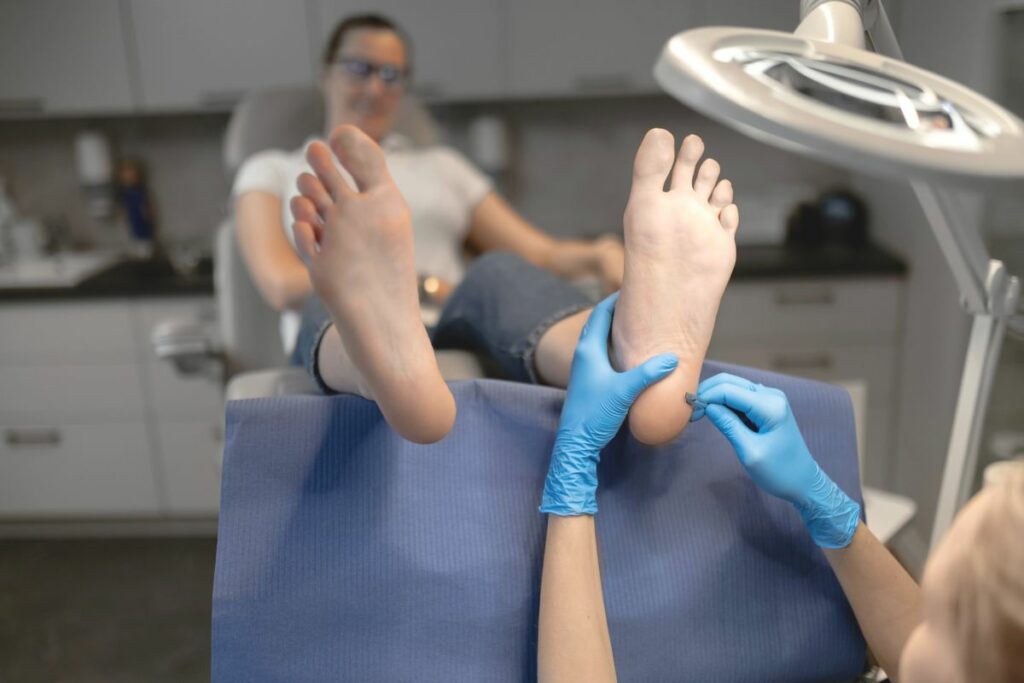
Each podiatry treatment begins with a thorough inspection of the feet and an assessment of their condition. Then the specialist proceeds to clean the soles, remove calluses and smooth the heels with a milling machine or other tools. An important stage is also the development of the nails - their appropriate shortening and giving the right shape. The whole process is completed with the application of care preparations that promote skin regeneration.
When to see a specialist - specific cases
It is worth visiting a podiatrist not only when the problem becomes troublesome. Prevention is equally important - especially for those who are prone to dry skin, cracked heels or ingrown nails. Regular visits can keep feet in good shape and prevent larger lesions from developing.
Home care - how to prolong the effects of treatments and prevent problems
The effects of a visit to the salon can be maintained for a long time if proper home care is introduced. It is daily habits that have the greatest impact on the condition of the skin and nails - and regularity is key.
Systematicity is key - daily habits for healthy feet
Feet deserve the same care as your face or hands. Daily moisturizing, gentle exfoliation and the use of specialized preparations keep the skin soft and the heels smooth. It is worth remembering that foot care is not a temporary action, but a permanent part of the routine.
What preparations to use - recommendations and advice from specialists
Specialists stress that the key to healthy and smooth feet is the use of cosmetics that are tailored to their individual needs. In daily care, it is worth reaching for moisturizers that prevent dryness and roughness of the skin. Once or twice a week it is good to perform a gentle scrub to remove dead skin and prepare the feet for better absorption of active ingredients. Those with a tendency to cracked heels should additionally use preparations with a more nourishing and thicker consistency, while in the case of excessive keratosis, foams or emulsions that are quickly absorbed and do not weigh down the skin are helpful. It is also worth remembering to regularly care for nails and cuticles to maintain the aesthetic appearance of the entire foot.
The most effective foot care products available at AArkada
AArkada's offer includes a wide range of specialized preparations that address the different needs of skin and nails. These are products designed for daily care, but also to prolong the effects of professional treatments at the podiatrist's office. Thanks to them, you can take comprehensive care of heels, nails and dry skin, while enjoying the comfort and aesthetic appearance of your feet all year round.
For cracked heels: Arkada's Ointment and MP Foam - quick relief and regeneration
Cracked heels require intensive and systematic care. AArkada ointment
is characterized by a rich texture that nourishes the skin well and supports its natural regeneration. Used regularly, it helps soften keratinized skin and improves skin elasticity. Combined with MP Foam, which further supports the smoothing process, it is an effective duo that brings quick relief and visible improvement in the condition of heels.
For dry skin: emulsion, calendula scrub, protective foam - moisturize and protect
Dry foot skin is a common problem that intensifies especially in summer and winter. To maintain its good condition, it is worth reaching for a set that combines three elements of care: AArkada emulsion providing daily moisturization, calendula scrub
exfoliating dead skin, and a light protective foam that protects the skin from drying out during the day. Regular use of this set leaves feet soft, supple and smooth to the touch.
For ingrown nails and thickening: TT Sept + TC16 serum - supportive care and prevention.
Ingrown nails and a tendency to thicken are problems that require special care. In daily care, preparations with supportive and preventive effects work well. TT Sept supports the care of the skin of the feet and nails, and AArkada TC16 serum strengthens the nail plate and accelerates its regeneration. The combination of both preparations allows you to take care of the comfort of your feet and keep your nails in good condition for a long time.
Do your feet need specialized podiatric therapy?
Not every foot problem can be solved alone at home. Home care, although very important, sometimes proves insufficient - especially when the skin is severely calloused, the heels begin to crack deeply, and the nails become ingrown or deformed. In such situations, specialized podiatric therapy is not only advisable, but even necessary to restore health, walking comfort and aesthetic appearance to the feet. It is worth remembering that regular consultations with a podiatrist make it possible to react to problems in their early stages, before they become more troublesome.
Indications and contraindications for treatments - what you should know
Both young and elderly people - regardless of gender or lifestyle - can visit the podiatrist's office. Indications include stubborn calluses, painful corns, deep heel cracks, ingrown nails or excessive dryness of the skin, which cannot be improved with traditional cosmetics. Increasingly, podiatrists are also caring for physically active people - runners or athletes - whose feet are particularly vulnerable to strain.
Contraindications to the treatments are few and mainly concern health conditions that require prior medical consultation, such as fresh wounds or certain chronic diseases in an advanced stage. In most cases, professional care is completely safe and brings rapid improvement in comfort.
What are the benefits of regular visits - long-term effects and foot health
Regular visits to a podiatrist are more than temporary relief. It's an investment in foot health for years to come. By systematically working out the skin and nails:
- The skin remains smooth and soft,
- The risk of painful calluses and cracks is minimized,
- Nails retain their proper shape and grow healthy,
- Walking comfort is significantly improved.
The long-term effect is an aesthetically pleasing appearance of the feet and a lower risk of recurrence of problems. Combined with home care and the use of appropriate podiatric preparations, regular visits create a complete foot care strategy that works for everyone - regardless of age or lifestyle.
Smooth feet and heels - frequently asked questions
What are the most common mistakes in home foot care?
The biggest mistake is lack of regularity. Another - using aggressive scrapers or pumice stones, which can damage the epidermis. A safer choice is professional foot products designed for sensitive skin.
Are there home remedies to soften very hard heels?
Home baths or masks can temporarily improve the condition of the skin, but the effects may not be long-lasting enough. The best results come from the systematic use of specialized products.
How often should podiatry treatments be performed?
Most often visits are recommended every 4-6 weeks, but the exact frequency depends on the patient's needs and lifestyle. It is worth establishing it individually with the podiatrist.
What footwear is the most foot health friendly?
It is best to choose shoes made of natural materials that allow the skin to breathe. Also important are the right size and a contoured sole to minimize the risk of corns and calluses.