Good quality nail clippers are one of the basic tools that should be found both in the podiatrist's office and in the home beautician. Although at first glance they may seem like a simple nail clipping tool, their quality is of great importance. It is what determines the effectiveness, safety and comfort of use. Professional nail pincers work well in the hands of a specialist, but also for any person who wants to take care of the aesthetics and health of their feet on their own.
Today we will give you tips on what should characterize reliable pliers, how to choose the right model and how to properly care for them so that they serve for a long time. At the end you will also find practical answers to the most frequently asked questions from specialists and patients.
What should be the characteristics of durable and reliable nail pliers?
Reliable podiatric tools must meet several basic requirements: sharpness, precision, durability and ergonomics. It is also worth paying attention to the quality of the material - the best pliers are made of steel resistant to frequent disinfection and sterilization processes. This is especially important in surgeries where tools are used daily and subjected to intensive use.
Durable and professional pliers should:
- have sharp and perfectly aligned blades - so that cutting is smooth, fast and does not require extra pressure,
- ensure precise cutting - so that the nail is cut evenly and aesthetically, without risk of damage,
- Be resistant to frequent disinfection and sterilization - stainless steel or other high-grade steel alloys are the best choice,
- have an ergonomic design - thanks to it, the tool fits comfortably in the hand and does not cause fatigue even during long work,
- be characterized by durability - good pliers retain their sharpness and functionality for many years of intensive use.
Sharpness of the blade - how to choose pliers that can cope with thick nails?
Sharp nail pliers are an absolute must. Only a well-sharpened tool allows you to quickly and precisely cut through even a very hard plate. In practice, this means that instead of pressing several times, one movement is enough.
When choosing nail shortening pliers, check that the edges are perfectly matched and professionally ground. An inaccurate fit can lead to crushing of the nail, which is not only uncomfortable, but can also result in an unsightly effect.
Precise cutting without crushing the plate - minimizing patient discomfort
The pliers with a solid construction and proper sharpness guarantee a clean, even cut. Such a tool:
- Prevents delamination of the plate,
- Eliminates unnecessary pressure that can cause pain,
- Reduces the risk of nail breakage,
- allows for a quick and comfortable treatment - both in the office and at home.
Precise cutting is especially important in podiatry offices. The specialist often works with the elderly, diabetics or patients with difficult nails, for whom any discomfort during the procedure can be particularly noticeable.
Ergonomics and safety - specialist comfort and patient protection
Ergonomics is another important consideration when choosing pliers - especially for the work of a specialist. The podiatrist spends long hours working with the tools - so the comfort of use has a direct impact on the precision of the procedure and the health of the specialist's hands.
Blade shape vs. minimizing the risk of injury - choosing the right tool
Good podiatric pliers have a properly contoured blade that adapts to the natural shape of the nail. This makes it easier to make cuts in hard-to-reach areas, such as at the nail shafts, and minimizes the risk of accidentally cutting the patient.
Some models have additional contouring to increase control of the tool - this is especially important when working with the elderly or patients with problematic nail plates.
Comfortable handle - less hand fatigue and more precision
The handle should be designed so that it fits stably in the hand, does not slip and does not require excessive pressure. Ergonomic pincers allow you to work for longer periods of time without feeling fatigue or hand pain. This is important especially in offices where many repetitive procedures are performed throughout the day.
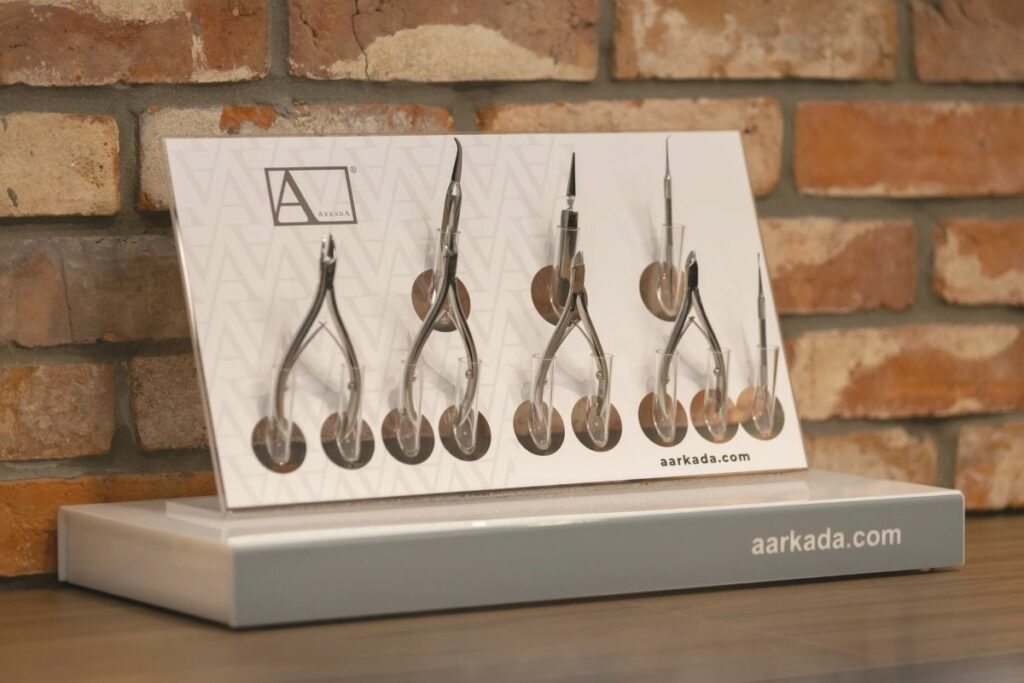
AArkada pincers - quality, precision and experience of specialists in your office
Choosing the right tool is an investment in the quality of the services of a podiatrist's office. AArkada brand offers tools that have been developed in response to the real needs of specialists - they are not only sharp and precise, but also durable and comfortable for daily use.
Why choose AArkada nail shortening pliers - expert reviews
Professionals appreciate AArkada pliers for their reliability and comfort. These tools are designed for intensive use, so they work well in podiatry offices, as well as in professional beauty salons and at home.
Reviews confirm that the sharpness of the blades and the solid design make the work go more smoothly, and patients feel more comfortable during the procedure.
What sets our tools apart from others - innovative solutions and materials
AArkada pliers are made from high-quality steel, which combines wear resistance with easy maintenance. Thanks to this, the tools retain their sharpness for a long time, and their care is not a problem. It's also worth noting the careful workmanship - every detail is refined to make work easier and increase patient safety.
How to take care of podiatric pincers so that they serve you for years?
Even the best podiatric scissors and pliers, made of high-quality steel, will not retain their functionality if they are not properly cared for. Proper care of the tools is not only a matter of their durability, but, above all, the safety of the patient and the comfort of the specialist. Regular cleaning, disinfection and proper storage keep the pliers in excellent condition and prevent loss of sharpness.
Cleaning, disinfection and storage - practical tips
- Mechanical cleaning - after each use, thoroughly remove the remains of the nail plate and other impurities. The best way to do this is to use a soft brush and running water. Avoid aggressive detergents that could damage the surface of the steel. Regular cleaning prevents the accumulation of particles that, over time, could hinder precise cutting.
- Disinfection - after cleaning the tool, disinfect it with a specialized product designed for podiatric accessories. This will ensure that the pliers are ready for safe use on the next patient (or household member). It is important to use agents recommended by tool manufacturers - some preparations can cause tarnishing of the steel surface or accelerate its corrosion.
- Sterilization - in an office setting, autoclave sterilization is an essential step. This process eliminates microorganisms and ensures complete hygiene at work. In order to stay sharp, it is worth noting that the instruments are placed in cassettes or packages that protect them from rubbing against each other during the sterilization cycle.
- Storage - the pliers should be stored in a dry, closed container, drawer or dedicated case. Ideally, each tool should have its own separate place - this avoids the risk of dulling or damaging the blades through contact with other podiatric office accessories. Moisture is the biggest enemy of steel - so always make sure your tools are completely dry before storing them.
- Regular oiling - for tools with a moving mechanism, it is a good idea to use a special preservative oil from time to time. This prevents galling of the hinges, facilitates smooth operation and protects against corrosion.
With such practices, the pliers will retain their sharpness, and their service life will be significantly extended. Equally important - by taking care of your tools, you also take care of the safety and comfort of yourself or the people who use your services.
When it's a good idea to replace a tool with a new one - health and safety at work
No tool lasts forever, which is why it is so important to regularly check their condition. Learn the signals that indicate it's time to replace your pliers:
- The blades no longer cut the nail in one movement and require more force,
- cavities, nicks or bumps have appeared on the blade,
- The tool does not close smoothly or stutters during operation,
- Despite cleaning, traces of corrosion are visible,
- pincers no longer meet the safety and hygiene standards required for the practice.
Replacing an instrument with a new one is an investment in service quality, patient protection and the comfort of your own work. It is better to make this decision earlier than to risk lowering the standards of the procedure.
Frequently asked questions about podiatric pliers - advice from specialists
Are AArkada pliers suitable for beginners?
Yes, the sharpness and ergonomics make the AArkada tools intuitive to use and also work well for people who are new to podiatry.
How to choose pliers for the type of nails and specific problems?
For hard and thickened nails, it is worth choosing pliers with a stronger design and a wide blade. For thinner and delicate nails, slender models are better for precision in hard-to-reach places.
Can I use these clamps in a home environment?
Of course, pliers can also be used at home. It is important to remember the basics of hygiene and proper storage.