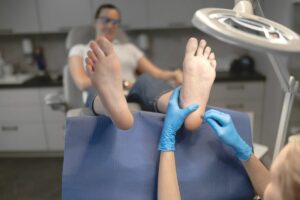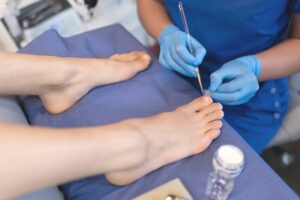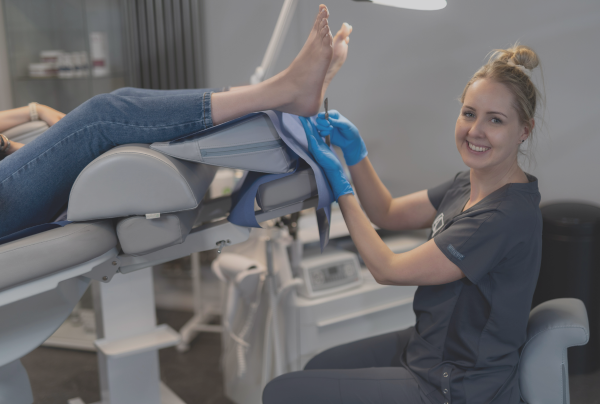
Who do you go to when you have a problem with your feet. A dermatologist or surgeon are not the only specialists who deal with disorders of the lower extremities. More and more podiatrist offices are being established in Poland, where you can go if you have nail fungus, ingrown toenails, painful corns or hallux valgus.
When you need to take care of your feet, dry and cracked foot skin?
Until recently, the profession of podiatrist was not very popular in Poland. Nowadays, we can see a growing number of offices where people who deal with podiatric problems work. It should be clearly noted that a podiatrist is not a doctor, but has the knowledge necessary to deal with the diagnosis and resolution of problems involving the feet. Until 2015, this was an occupation classified in the cosmetology department, while for several years now it has been among the paramedical professions.
What does a podiatrist do?
The practitioner diagnoses lesions in the feet - finds the causes, and then adjusts the appropriate therapy. He also performs non-surgical treatments to restore proper function to the feet. He deals with fungal, viral and bacterial lesions in the lower extremities. Here is a list of the most commonly diagnosed conditions:
However, it is worth remembering that some of the symptoms may also suggest other diseases. The podiatrist establishes cooperation with doctors of various specialties and often forms interdisciplinary teams with them to address problems:
- ingrown toenails
- Nail and foot skin fungus,
- corns and calluses
- diabetic foot
- cracked foot skin and clefts on the heels,
- warts,
- hallux valgus.
In addition, the podiatrist's office offers foot care treatments. The services provided include nail shortening, removal of keratinized skin or getting rid of corns.
The podiatrist does not work alone - when necessary, he consults additionally with a dermatologist, diabetologist, phlebologist or surgeon. His services are mainly used by athletes, who struggle daily with foot pain caused, among other things, by wearing shoes that are too tight and narrow, corns and minor injuries. The office is also visited by people struggling with fungal diseases or foot pain resulting from improperly trimmed, ingrown toenails.