Home pedicure is an excellent way to keep your feet in good shape without having to visit a specialist. In this article, we will show you step by step how to perform a pedicure at home, what tools and cosmetics will be necessary, and why you should take care of your feet regularly. Use our tips to enjoy healthy and well-groomed feet all year round.
When is it advisable to opt for a home pedicure, and when to visit a specialist?
The decision between an at-home pedicure and a visit to a specialist depends on a number of factors, such as the health of your feet, time availability and personal preference. Consider your needs and expectations to make the best decision. In what situations is it advisable to go to a podiatrist, and when is it safe to get a pedicure at home?
In what situations should one go to a podiatrist?
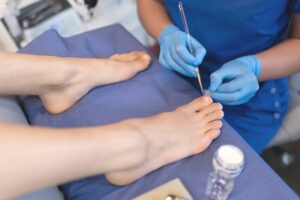
If you suffer from severe discomfort or have problems in your feet and nails, you may need professional podiatric treatment. By consulting a specialist, you'll avoid risky work on lesions like calluses or corns on your own, or cutting ingrown nails yourself, which can only make matters worse. A podiatrist is qualified and experienced enough to perform the procedure safely and effectively, minimizing the risk of complications.
Is a home pedicure safe?
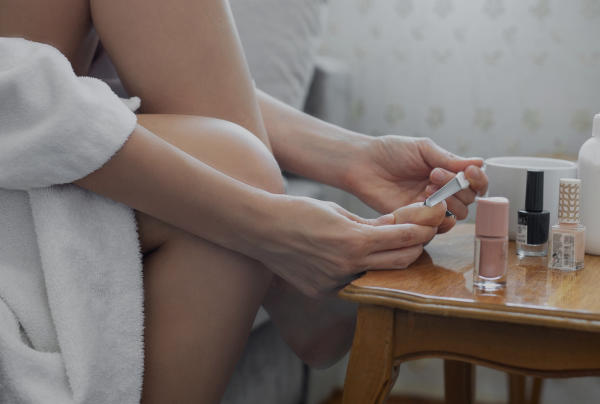
A home pedicure is a great option to keep your feet and nails in good shape when you don't have an ailment. A home spa for your feet is a form of care and relaxation in one. However, it is worth remembering that a home pedicure should be performed with proper hygiene and using the right tools and cosmetics. This will make the treatment safe and effective.
Benefits of regular foot care at home
Regular care allows you to maintain the health and aesthetic appearance of your feet. With the right tools and cosmetics, you can enjoy smooth heels and well-groomed nails. Regular pedicure treatments also help prevent skin problems, such as corns and calluses. A home pedicure is also a great opportunity for a little relaxation and unwinding after a hard day.
Necessary accessories and cosmetics for home pedicure
To perform an effective and safe pedicure at home, it is worth getting the right tools and cosmetics. What products to choose to achieve the best results?
Pedicure tools - what is worth having in your cosmetic bag?
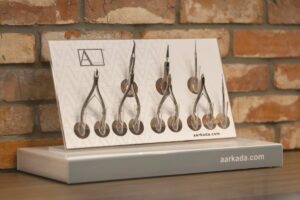
- Nail shortening pliers - it is important that the nail shortening tool is sharp, so that it does not crush the nail plate when cutting.
- Arkada's double-sided gr ater - ideal for working out the epidermis on the sole of the foot.
Foot care cosmetics - what to choose?
Choosing the right cosmetics for pe feet is of great importance in ensuring their health and aesthetic appearance. AArkada brand offers professional podiatric products that are ideal for both home and specialized use - in podiatry offices. What cosmetics from AArkada are worth considering?
- Arkada's MP Foam - is a keratolytic skin and nail foam that perfectly softens the cuticle for easy removal. It is ideal for preparing feet before further stages of pedicure. The foam contains active ingredients that have a moisturizing and regenerating effect, which makes the skin of the feet soft and smooth.
- Arkada's Serum TC16 - a nail serum that strengthens and nourishes the nail plate. It contains natural ingredients, such as tea tree oil, which have antibacterial and antifungal properties. Regular use of the serum helps to regenerate nails, preventing breakage and splitting.
- Arkada's Scrub Calendula and Arkada's Scrub Geranium are sugar foot scrubs that effectively remove dead skin, leaving the skin smooth and refreshed. The scrubs contain natural ingredients, such as calendula and geranium extract, which have soothing and regenerative effects.
- Arkada's Foam Protection - is a protective foam lotion for skin and nails, which intensively moisturizes and protects the skin from harmful external factors. The lotion forms a protective layer on the skin that prevents moisture loss and protects against irritation.
- Arkada's Emulsion - a soothing emulsion with a delicate texture that perfectly moisturizes and regenerates the skin of the feet. The emulsion contains active ingredients that soothe irritation and accelerate skin regeneration processes.
How to do a home pedicure step by step?
Performing a pedicure at home can be easy and fun, as long as you know the right steps and have the necessary accessories on hand. How to perform a home pedicure step by step? Read on and you'll learn how to soften the skin, work out the cuticle, shorten the nails and moisturize the skin to enjoy healthy and well-groomed feet.
Step 1 - Soften the skin and prepare the feet
Soften the cuticle with Arkada's MP Foam. Apply the foam to your feet and leave it on for a few minutes to soften the skin.
Step 2 - Development of the epidermis
Work out the epidermis with a double-sided grater. How to safely remove keratoses with a grater? Gently rub off the dead skin, avoiding too much pressure. The most common mistake when removing dead skin is just rubbing too hard, which can lead to irritation.
Step 3 - Nail shortening and preparation
Shorten the nails with specialized pliers. Cut the nails according to its natural shape. Why use pincers instead of traditional scissors? The pincers provide precise cutting, minimizing the risk of damage to the nail plate.
Step 4 - Peeling and smoothing the skin
Perform a scrub by choosing between Arkada's Scrub Calendula and Arkada's Scrub Geranium. Both will perfectly smooth the skin on your feet, leaving it soft and supple to the touch.
Step 5 - Moisturize and regenerate the skin and nails
To finish the treatment, apply care products. On the nails - Arkada's Serum TC16, and on the skin of the feet - depending on the type of skin: ointment, emulsion or light foam cream. The differences between these cosmetics are mainly consistency and intensity of hydration.
Regular pedicure at home - why take care of it?
Regular pedicure at home is a very important aspect in taking care of healthy feet. Why take care of regular foot care?
- Foot health - regular pedicure treatments help maintain foot health and prevent corns, calluses and other skin problems. With regular removal of dead skin, the skin of the feet will remain smooth and soft.
- Aesthetics - well-groomed feet look aesthetically pleasing and are pleasant to the touch. Regular shortening and care of nails prevents ingrown nails and brittleness.
- Relaxation and comfort - a home pedicure is a great opportunity to relax and unwind. By performing the treatment at home, you can create a small spa for yourself to relax after a hard day.
- Saving time and money - regular visits to a podiatrist can be costly and time-consuming. By getting a pedicure at home, you save both time and money while taking care of your feet in a professional manner.
- Prevention of problems - regular foot care allows early detection of possible problems, such as nail fungus or skin infections, so that appropriate action can be taken more quickly.
Home pedicure - frequently asked questions
Is home pedicure safe for everyone?
Yes, home pedicure is safe for most people, provided the right tools and cosmetics are used and hygiene is observed. It is important to avoid excessive abrasion of the epidermis and the use of sharp tools without proper experience. People with more serious health problems, such as diabetes, should consult a podiatrist before starting home treatments.
What are the best pedicure products?
The best pedicure products are those that are effective, safe and proven. It makes sense to choose cosmetics and tools from reputable manufacturers such as AArkada. Examples of recommended products include Arkada's MP Foam, Arkada's Serum TC16, and Arkada's Scrub Calendula and Arkada's Scrub Geranium. Professional products provide better results and are more tailored to the needs of the feet.
Can a home pedicure replace a visit to a podiatrist?
A home pedicure can be a great complement to professional podiatric treatments, but it is no substitute for visiting a specialist for more serious foot problems. Regular visits to a podiatrist are important, especially if you are prone to ingrown toenails, corns or other ailments. A podiatrist can also advise you on the best pedicure products and tools for at-home foot care.